What Causes Hair Fall? Common Reasons for Hair Loss
Finding more hair than usual on your pillow, hairbrush or in the shower can be worrying.
You may start asking:
“Why is my hair falling out?”
Some daily hair shedding is completely normal. The American Academy of Dermatology notes that people normally shed around 50 to 100 hairs a day as part of the natural hair-growth cycle. More noticeable shedding or gradual thinning, however, can have many different causes.
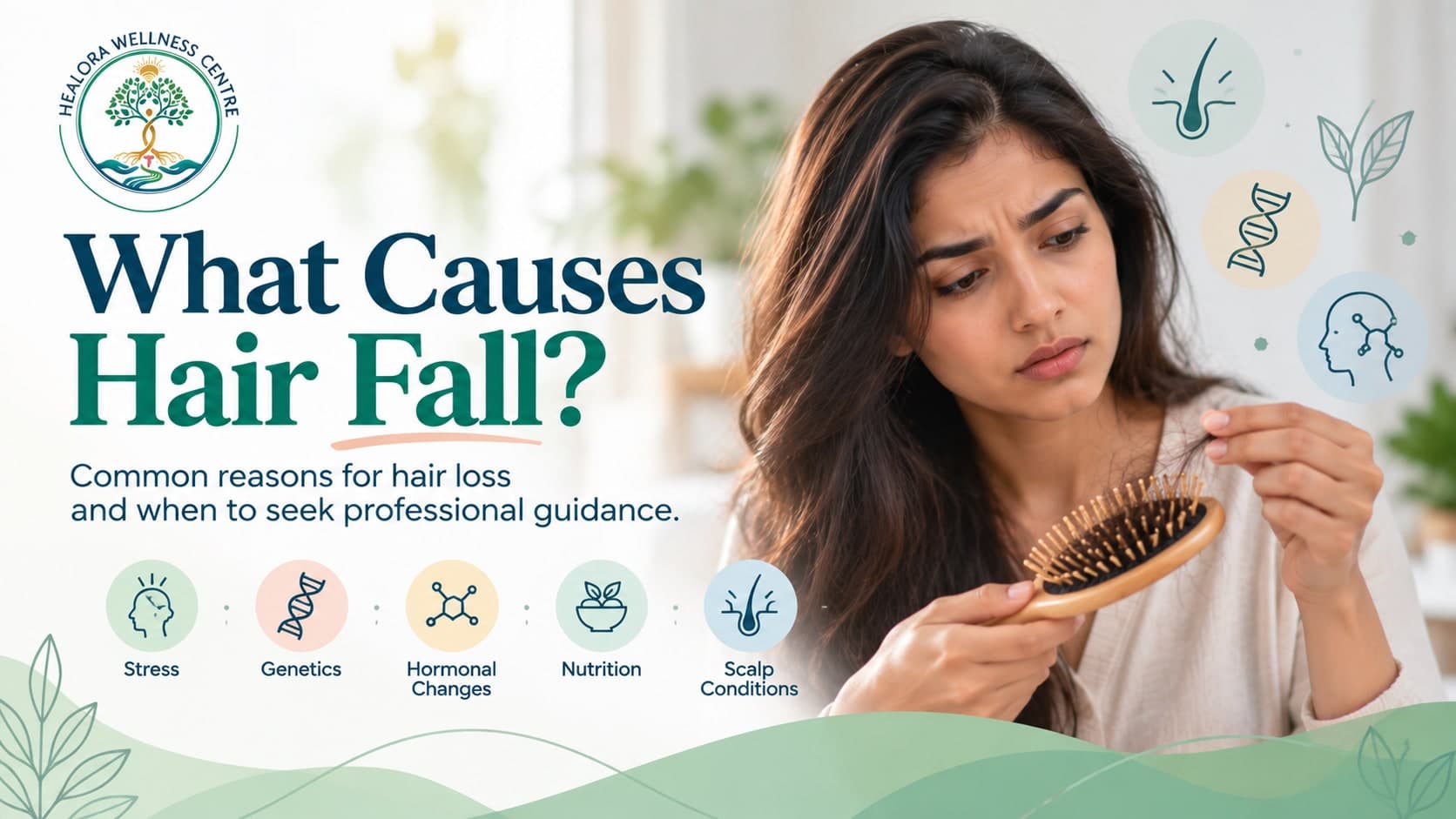
Hair fall isn't always caused by one thing. Genetics, stress, hormonal changes, illness, nutrition, medications, hairstyles and scalp conditions can all contribute.
The important thing is to understand what type of hair loss you are experiencing and what may be causing it.
Is It Normal to Lose Hair Every Day?
Yes.
Your hair naturally goes through phases of growth, resting and shedding. Losing some hair when brushing or washing it doesn't necessarily mean you are developing hair loss.
The concern is more about a noticeable change from your usual pattern.
You might notice:
- Much more hair on your pillow
- Large amounts of hair in the shower
- Clumps of hair coming out when brushing
- A widening hair part
- A thinner ponytail
- A receding hairline
- A bald patch
- Gradual thinning across the scalp
These can be signs of different types of hair loss and may require different approaches.
What Are the Common Causes of Hair Fall?
There are many possible causes of hair loss. Some are temporary, while others may continue without appropriate treatment.
1. Hereditary Hair Loss
Genetics are one of the most common causes of hair loss.
This is often called androgenetic alopecia or pattern hair loss.
In men, it commonly appears as:
- A receding hairline
- Thinning around the crown
- A gradually developing bald spot
In women, it often appears as:
- A widening part
- Reduced hair density
- Gradual thinning across the top of the scalp
The pattern and progression can vary from person to person.
If hair thinning is gradually becoming more noticeable, identifying the cause early can be useful because different forms of hair loss require different approaches.
2. Stress and Excessive Hair Shedding
A period of significant physical or emotional stress can sometimes be followed by increased hair shedding.
This can happen after:
- A major illness
- High fever
- Surgery
- Significant weight loss
- Childbirth
- Severe emotional stress
This type of excessive shedding is commonly known as telogen effluvium.
Interestingly, the increased shedding may not happen immediately. The American Academy of Dermatology notes that people can notice excessive shedding a few months after the triggering event.
When the trigger resolves, hair shedding may gradually return toward normal, although recovery takes time.
3. Hormonal Changes
Hormones can influence hair growth and hair shedding.
Hair thinning may occur alongside hormonal changes associated with:
- Pregnancy
- The period after childbirth
- Menopause
- Polycystic ovary syndrome (PCOS)
- Changes in hormonal medication
- Certain hormonal conditions
PCOS, for example, can be associated with hair loss in women.
If hair loss occurs together with irregular periods, acne, unwanted facial hair or other hormonal symptoms, it may be worth discussing the wider pattern with a healthcare professional.
You can also explore Healora's Female Complaints and Women's Health services if hormonal or women's-health concerns are part of your situation.
4. Hair Loss After Pregnancy
Many women notice increased hair shedding after giving birth.
This can be surprising because pregnancy itself may have changed the normal hair-growth cycle.
After childbirth, hormonal changes can cause more hairs to enter the shedding phase.
The result can be noticeable hair fall several weeks or months after delivery.
This type of shedding is often temporary, although the amount and duration can vary.
If postpartum hair loss is severe, prolonged or accompanied by other symptoms, professional evaluation can help rule out other possible causes.
5. Nutritional Deficiencies
Your hair follicles need adequate nutrition to support normal growth.
Insufficient amounts of certain nutrients can contribute to noticeable hair loss. The American Academy of Dermatology identifies inadequate iron, protein, zinc or biotin among possible causes.
However, this doesn't mean every case of hair fall is caused by a vitamin deficiency.
Taking multiple hair-growth supplements without knowing whether you actually have a deficiency may not solve the problem.
In fact, excessive intake of some nutrients can itself cause problems, according to the AAD.
If your diet is restrictive or you are concerned about nutritional intake, a Diet & Nutrition consultation can help you discuss your dietary pattern and nutritional needs.
6. Thyroid Problems
Changes in thyroid function can sometimes be associated with hair thinning or increased hair shedding.
Some people with thyroid problems may notice that their hair becomes thinner or that more hair comes out while brushing.
Because hair loss can have many causes, hair fall alone cannot tell you whether your thyroid is responsible.
If you have persistent hair loss alongside other symptoms such as changes in energy, weight, temperature sensitivity or other unexplained changes, discuss them with an appropriate healthcare professional.
7. Certain Medications and Treatments
Some medications can have hair loss as a possible side effect.
Cancer treatments such as chemotherapy and radiation involving the head or neck can also cause significant hair loss.
If you suspect that a medication is contributing to your hair loss, don't stop taking it on your own.
Instead, speak with the healthcare professional who prescribed it.
8. Tight Hairstyles Can Cause Hair Loss
Your hairstyle can also affect your scalp and hair follicles.
Repeatedly wearing hair tightly pulled into:
- Tight ponytails
- Buns
- Braids
- Cornrows
- Extensions or other styles that pull on the hair
can contribute to traction alopecia.
Continued tension can damage hair follicles and, in some cases, lead to permanent hair loss.
If you regularly wear tight hairstyles, reducing tension and giving your scalp a break may help prevent further damage.
9. Hair Treatments and Damage
Frequent chemical treatments can weaken hair and contribute to breakage.
Examples include:
- Frequent colouring
- Perming
- Relaxing
- Excessive heat styling
- Aggressive brushing
The AAD notes that chemical processing can damage hair and, over time, contribute to hair loss.
It's also important to distinguish hair breakage from hair loss originating at the follicle. They can look similar but may have different causes.
10. Scalp Conditions and Infections
Hair loss can sometimes be associated with conditions affecting the scalp.
For example, scalp infections can cause areas of scaling, inflammation and hair loss. Scalp psoriasis can also be associated with hair shedding.
If hair loss is accompanied by:
- Itching
- Scaling
- Redness
- Pain
- Inflammation
- Crusting
- Bald patches
it's worth getting the scalp assessed rather than assuming the problem is simply nutritional or genetic.
11. Alopecia Areata
Alopecia areata is an autoimmune condition in which the immune system attacks hair follicles.
It can cause round or patchy areas of hair loss and can affect the scalp, eyebrows, eyelashes and other areas where hair grows.
Sudden patches of hair loss should be professionally assessed because several conditions can cause similar-looking symptoms.
Why Does My Hair Keep Falling Out?
If you're experiencing ongoing hair fall, it's tempting to immediately blame:
“stress”
or:
“vitamin deficiency.”
But hair loss has many possible causes.
Two people can have similar-looking hair thinning while having completely different underlying reasons.
For example:
Person A: hereditary pattern hair loss
Person B: increased shedding after an illness
Person C: nutritional deficiency
Person D: hormonal changes
Person E: scalp condition
This is why identifying the likely cause is more useful than simply buying another hair-loss product.
Hair Shedding vs. Hair Loss: What's the Difference?
These terms are often used interchangeably, but they aren't exactly the same.
Hair shedding
You may notice significantly more hairs falling out than usual, often after a physical or emotional trigger.
Hair loss
Something is interfering with the normal growth of hair, resulting in thinning, bald patches or reduced hair density.
Some people can experience both increased shedding and underlying hair loss at the same time.
If you're unsure which one you're experiencing, professional assessment can help.
When Should You See a Healthcare Professional About Hair Fall?
Consider getting professional advice if:
- Hair loss is persistent or worsening
- You notice a widening part
- Your hairline is receding
- You develop bald patches
- Hair is falling out in clumps
- You have sudden or rapid hair loss
- Your scalp is itchy, painful, inflamed or scaly
- Hair loss started after a significant illness
- Hair loss is accompanied by hormonal symptoms
- You are concerned about nutritional deficiencies
- Hair loss is affecting your confidence or daily life
Sudden or unusual hair loss deserves particular attention because some causes are easier to address when identified early.
Should I Take Hair Growth Supplements?
It's understandable to look for a quick solution when you're losing hair.
However, supplements aren't automatically the answer.
If a deficiency is contributing to hair loss, correcting that deficiency may help. But taking nutrients you don't need isn't necessarily beneficial, and excessive amounts of some supplements can actually contribute to problems.
The better approach is to understand why you're losing hair first.
What Can You Do About Hair Fall?
Start by paying attention to the pattern.
Ask yourself:
- When did the hair fall begin?
- Is it sudden or gradual?
- Is your hair thinning everywhere or only in specific areas?
- Did you recently have an illness or high fever?
- Have you experienced significant stress?
- Have you recently given birth?
- Has your diet changed?
- Are you taking any new medications?
- Have you started a new hair treatment?
- Are you experiencing hormonal or scalp symptoms?
These details can help a healthcare professional understand what may be happening.
Can Nutrition and Lifestyle Affect Hair Health?
Your overall health and nutrition are important parts of maintaining healthy hair.
A balanced diet that provides adequate protein and essential nutrients supports normal body functions, including hair growth.
However, hair loss shouldn't automatically be attributed to diet.
If you're eating a restrictive diet, have recently lost significant weight or have concerns about nutritional deficiencies, professional dietary guidance can be useful.
Explore Healora Diet & Nutrition for personalized nutrition support.
Can an Online Consultation Help With Hair Fall?
An online consultation can be a convenient starting point for discussing non-emergency hair and wellness concerns.
At Healora, patients can connect with healthcare professionals online across several specialties.
During a consultation, you can discuss:
- When your hair fall started
- Your recent health history
- Stress and lifestyle changes
- Nutrition and dietary habits
- Hormonal concerns
- Existing health conditions
- Changes in your hair-care routine
Depending on the symptoms, the professional may recommend further evaluation or an in-person assessment if one is needed.
You can explore Healora's specialties to find the service that best matches your concerns.
What About Homeopathy for Hair Fall?
Some people explore homeopathic care for hair and scalp concerns.
If you are considering any complementary approach, it's important not to assume that a particular treatment will work for every type of hair loss.
Hair loss has many possible causes, and an appropriate assessment of the underlying problem remains important.
Healora offers Homeopathy consultations as one of its healthcare services. Any persistent, sudden or significant hair loss should also be appropriately evaluated, particularly when there are signs of an underlying medical or scalp condition.
Don't Ignore Sudden Hair Loss
Gradual hair thinning can sometimes develop over months or years.
Sudden hair loss is different.
If you suddenly develop:
- Large bald patches
- Rapid thinning
- Significant clumps of hair loss
- Eyebrow or eyelash loss
- Scalp inflammation
- Painful or severely itchy areas
it's worth seeking professional evaluation rather than relying only on home remedies or supplements.
Frequently Asked Questions
How much hair loss is normal per day?
The American Academy of Dermatology states that losing around 50 to 100 hairs a day can be normal. Noticeably increased shedding or thinning may indicate a different issue.
What is the most common cause of hair loss?
Hereditary hair loss is one of the most common causes worldwide. However, hair loss has many possible causes, so the pattern and individual circumstances matter.
Can stress cause hair fall?
Yes. Significant physical or emotional stress can trigger excessive hair shedding, sometimes several months after the stressful event.
Can nutritional deficiencies cause hair loss?
Inadequate amounts of nutrients such as iron, protein, zinc or biotin can contribute to noticeable hair loss. However, not every case of hair fall is caused by a nutritional deficiency.
Can PCOS cause hair loss?
PCOS can be associated with hair loss in women because of hormonal changes. If hair loss occurs alongside irregular periods, acne or other hormonal symptoms, professional assessment may be appropriate.
Why am I suddenly losing so much hair?
Sudden increased shedding can occur after illness, high fever, surgery, major stress, significant weight loss or childbirth. Other causes are also possible, so persistent or severe hair loss should be assessed.
Should I see a doctor for hair loss?
Consider professional advice if your hair loss is sudden, persistent, worsening, associated with scalp symptoms or accompanied by other health changes.
Can hair grow back after hair loss?
It depends on the cause. Some forms of increased shedding can resolve after the trigger has passed, while other types of hair loss may require treatment to slow progression or encourage regrowth.
Takeaway
Hair fall can have many causes, and finding the cause is more important than simply trying another hair-growth product.
Stress, genetics, hormonal changes, nutritional deficiencies, illness, medications, hair-care practices and scalp conditions can all play a role.
If you're noticing persistent thinning, excessive shedding or sudden hair loss, consider getting professional guidance rather than trying to diagnose the cause yourself.
Concerned About Hair Fall?
Healora provides online consultations across multiple healthcare specialties, allowing you to discuss your concerns and understand what type of professional guidance may be appropriate.