Loading...
Loading...
Loading...
Breast skin changes, which can indicate conditions ranging from infections to cancer, include persistent redness, swelling, thickening, pain, or a peau d'orange texture (resembling orange peel).
Breast skin changes refer to unexpected alterations in the texture, color, or appearance of the breast skin—such as dimpling, redness, thickening, or scaling—which can indicate underlying conditions, including cancer. Key signs include peau d'orange (orange peel texture), nipple inversion, rashes, or warmth.
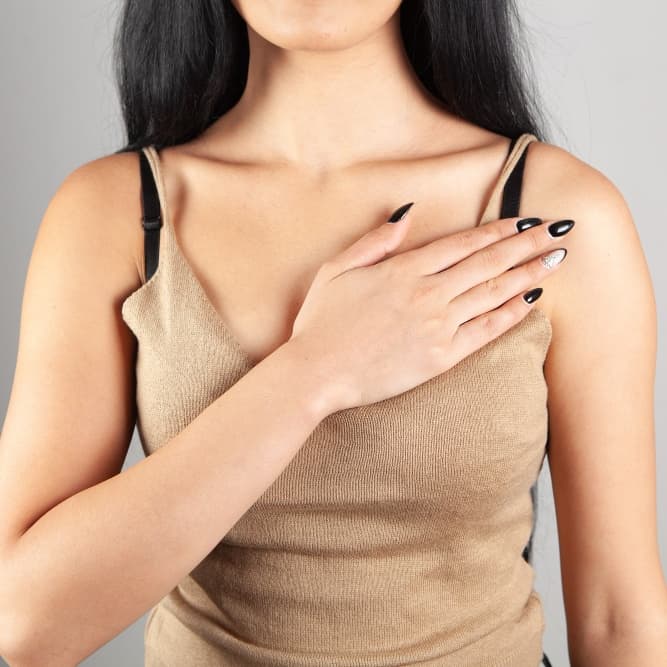
Homeopathy helps manage breast skin changes by using highly diluted natural substances to treat symptoms based on individual constitutional types, focusing on underlying hormonal or inflammatory causes rather than just the surface symptom. It is commonly used to alleviate conditions like breast engorgement, tenderness, skin discoloration, and the development of lumps, often providing a natural alternative for addressing discomfort.
Important highlights and key medical insights about this condition.
Peau d'orange: Skin thickening or texture changes resembling an orange peel, often indicating lymphatic blockage.
Color Changes: Persistent redness, purple, pink, or bruise-like discoloration that does not go away.
Texture/Surface Changes: Dimpling, puckering, or ridges on the skin.
Nipple Changes: A new inverted, retracted (pulled in), or flattened nipple.
Itching, Scaling, or Crusting: A persistent rash or eczema-like rash on the nipple or areola.
Warmth and Swelling: One breast feeling unusually warm, swollen, or tender.
Learn more about this speciality and how our experts help you achieve better health outcomes.
Breast skin changes affect people of all genders and ages, though they are most common in women due to hormonal fluctuations during menstruation, pregnancy, and menopause.
See a doctor promptly if you notice new, persistent breast skin changes, including dimpling, puckering, rash, redness, thickened "orange peel" texture (peau d'orange), or unexplained scaling.
Connect with experienced doctors who specialize in treating this condition and receive professional medical guidance.
Qualifications: BHMS.(FMHMC), MSc Psychology and Counselling, PG Diploma in Guidance and Counselling, Diploma Interactive Drawing Therapy (IDT), Cognitive Behavioural Therapy (CBT), De‑addiction Training (NIMHANS).

Qualifications: BHMS