Loading...
Loading...
Loading...
Couple therapy is a structured, supportive space where partners work with a trained therapist to understand each other more clearly, improve communication, and navigate challenges in their relationship. It isn’t about deciding who’s “right” or “wrong.” Instead, it focuses on strengthening connection, resolving conflict in healthier ways, and rebuilding trust, teamwork, and emotional safety. The process is collaborative and tailored to each couple’s needs, pace, and goals.
Not at all. Many couples seek therapy long before things reach a breaking point. It can help with: - communication difficulties - recurring arguments - feeling disconnected - navigating life transitions - rebuilding trust - strengthening emotional or physical intimacy Couple therapy is just as useful for maintaining a healthy relationship as it is for repairing a strained one. If you’re unsure, talking with a mental health professional or someone you trust can help you explore whether it’s the right time.
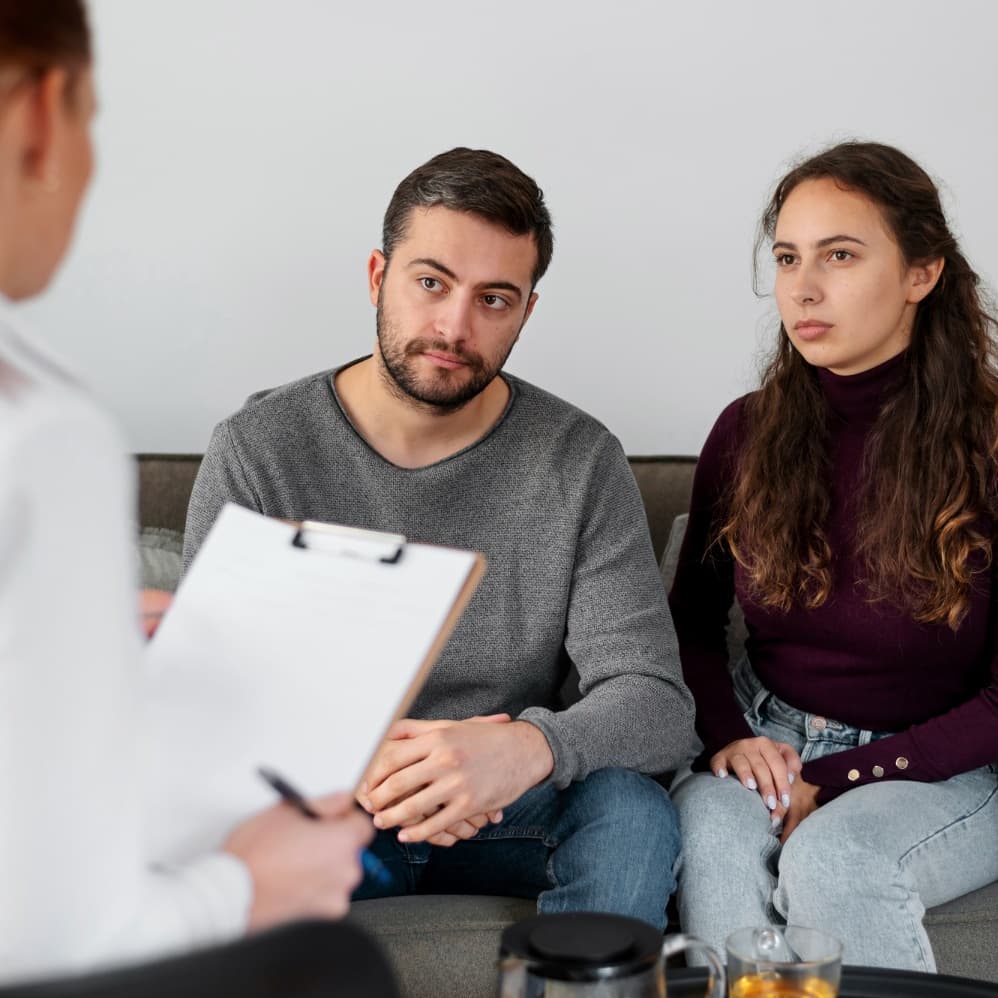
A couple therapist’s role is to support the relationship, not to judge or choose one partner over the other. The focus is on understanding patterns, improving communication, and helping both partners feel heard and respected. The therapist works to create a balanced, safe environment where each person can express themselves without fear of blame. If either partner feels misunderstood or overwhelmed, bringing that up in session can help the therapist adjust the approach and keep the space supportive.
Explore specific conditions and related treatments.
Couple therapy for communication gaps and silent treatment focuses on helping partners break unhealthy patterns of avoidance and disconnection. Silent treatment often arises from unresolved conflicts, emotional hurt, or difficulty expressing feelings. Counselling provides a safe space for both partners to voice concerns, learn healthier communication techniques, and rebuild trust. The goal is to replace silence with dialogue, foster empathy, and strengthen the emotional bond, ensuring that conflicts are addressed constructively rather than ignored.
Couple therapy in the context of healthy sacrifices versus losing identity focuses on helping partners balance compromise with self-preservation. In relationships, sacrifices are often necessary to maintain harmony, but when one partner consistently gives up their personal values, goals, or individuality, it can lead to resentment and emotional imbalance. Counselling provides a safe space for couples to explore boundaries, understand each other’s needs, and learn how to compromise without erasing personal identity.
Couple therapy in identifying love languages helps partners understand how each expresses and receives love. Love languages such as words of affirmation, acts of service, receiving gifts, quality time, and physical touch play a vital role in emotional connection. When partners have different love languages, misunderstandings can arise, leading to feelings of neglect or imbalance. Counselling provides a safe space to explore these differences, improve communication, and teach couples how to meet each other’s emotional needs.
Couple therapy in mutual understanding and empathy building focuses on helping partners truly listen to each other, validate emotions, and see situations from one another’s perspective. Many relationship conflicts arise not from lack of love but from miscommunication and unmet emotional needs. Counselling provides a safe environment where couples can practice empathy, learn active listening skills, and develop deeper awareness of each other’s feelings. The goal is to strengthen trust, reduce conflict, and create a relationship where both partners feel valued and understood.
Couple therapy in the context of past relationships and emotional baggage helps partners address unresolved issues that may be affecting their current relationship. Emotional baggage can include lingering hurt, mistrust, or insecurities carried over from previous experiences. Counselling provides a safe environment for couples to explore these feelings, understand their impact, and learn healthier ways to move forward together.
Couple therapy in trust and infidelity issues focuses on rebuilding emotional safety, honesty, and connection after betrayal or broken trust. Infidelity whether emotional or physical can deeply damage a relationship, leading to feelings of anger, insecurity, and loss of intimacy. Counselling provides a structured space for both partners to express their emotions, understand the root causes, and work toward healing. The goal is to restore transparency, rebuild trust gradually, and help couples decide whether and how to move forward together in a healthier way.
Couple therapy in life improvement and goal analysis focuses on helping partners align their personal and shared aspirations. Many couples struggle when individual goals clash with relationship priorities, leading to stress or disconnection. Counselling provides a structured space to explore values, set realistic goals, and create strategies that support both personal growth and the relationship. The aim is to foster teamwork, mutual encouragement, and a vision for the future where both partners feel fulfilled and supported.
Couple therapy in family and household conflicts focuses on helping partners manage disagreements related to responsibilities, decision-making, and extended family dynamics. Conflicts often arise from unequal division of chores, financial stress, parenting styles, or interference from relatives. Counselling provides a safe space for couples to express frustrations, clarify expectations, and develop fair solutions. The goal is to improve cooperation, strengthen teamwork, and create a balanced household environment where both partners feel respected and supported.

Couple therapy in intimacy and sexual satisfaction focuses on helping partners strengthen emotional closeness, improve communication, and address challenges in their sexual relationship. Counsellors provide a safe, non-judgmental space where couples can explore issues such as mismatched desires, performance anxiety, or emotional disconnect. Therapy often combines techniques from relationship counselling and sex therapy, aiming to rebuild trust, enhance intimacy, and create healthier patterns of connection.
Connect with experienced doctors who specialize in treating this condition and receive professional medical guidance.

Qualifications: BHMS.(FMHMC), MSc Psychology and Counselling, PG Diploma in Guidance and Counselling, Diploma Interactive Drawing Therapy (IDT), Cognitive Behavioural Therapy (CBT), De‑addiction Training (NIMHANS).

Qualifications: MA Psychology (Pursuing), Advanced Diploma in Counseling Psychology, Auxiliary Nurse & Midwife, Diploma in Hospital Administration, Relaxation Therapy, Child Psychology.