
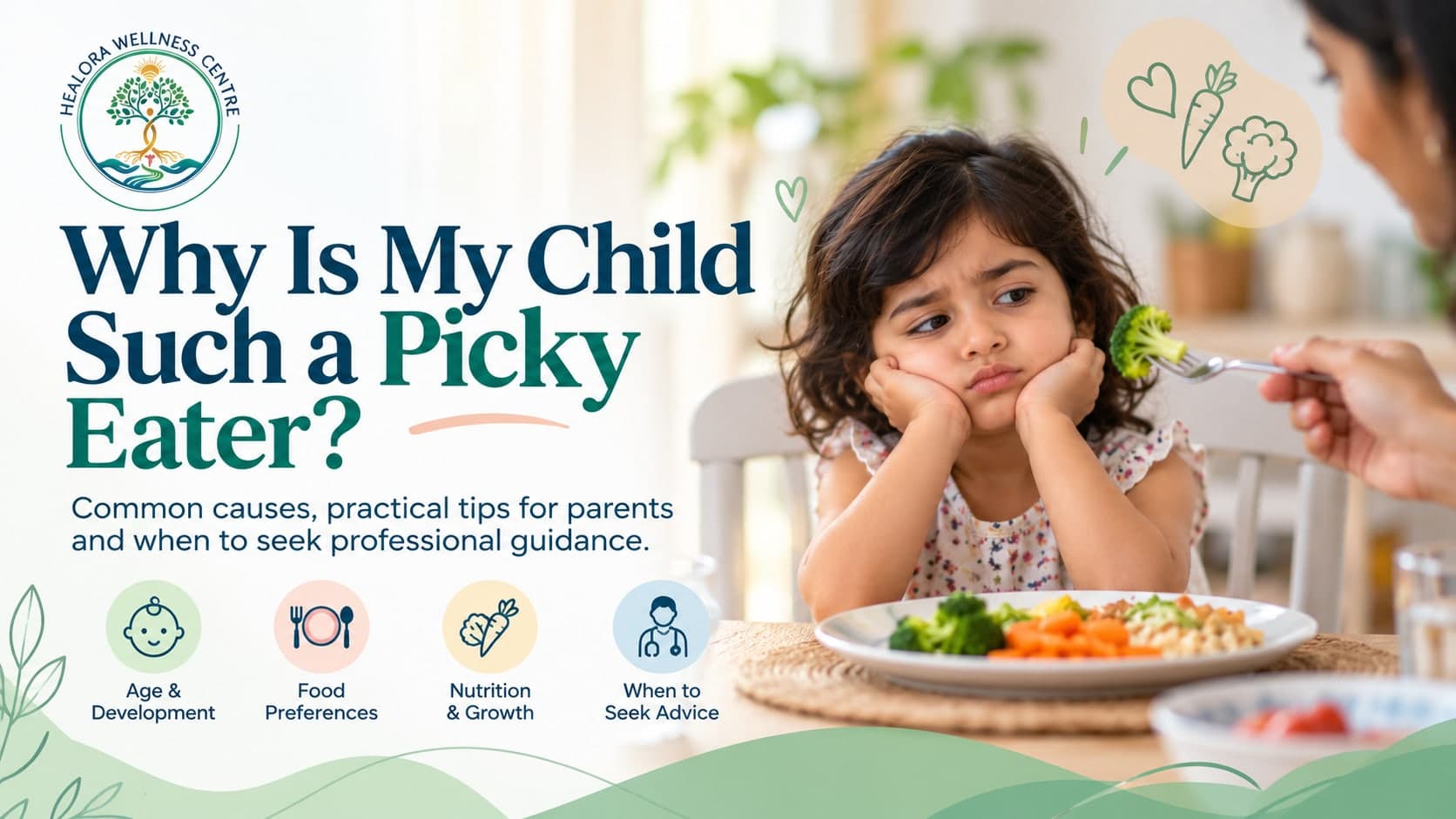
Why Is My Child Such a Picky Eater?
Does your child seem to survive on the same few foods every day?
Maybe they refuse vegetables, push away anything unfamiliar or suddenly decide that a food they loved last week is no longer acceptable.
For many parents, mealtimes can become stressful very quickly.
You may find yourself asking:
“Why is my child such a picky eater?”
The good news is that picky eating is common during childhood, particularly in the toddler and preschool years. Children may become selective about flavours, textures, smells or even how foods are arranged on their plate. The CDC notes that behaviours such as favouring only a few foods or not wanting different foods to touch can be normal during early childhood.
But while picky eating is often part of normal development, it is still important to pay attention to your child's overall nutrition, growth and relationship with food.
What Is Picky Eating?
Picky eating generally means being selective about which foods a child is willing to eat.
A picky eater may:
- Eat only a small number of familiar foods
- Refuse foods because of their colour or texture
- Avoid vegetables or certain food groups
- Refuse to try unfamiliar foods
- Suddenly stop eating foods they previously enjoyed
- Want the same meal repeatedly
- Become upset when a preferred food isn't available
- Dislike foods touching each other on the plate
Children can be selective for different reasons, and their eating habits can change considerably as they grow.
Why Do Children Become Picky Eaters?
There isn't one single reason for picky eating.
For young children, it can simply be part of learning about food and developing independence.
1. Your Child Is Becoming More Independent
As children grow, they begin to discover that they can make their own choices.
Food can become one area where they want control.
You may hear:
“I don't want that.”
or:
“I only want pasta.”
This doesn't necessarily mean something is wrong.
AAP guidance notes that selective eating is particularly common around the toddler and preschool years and is often temporary.
2. New Foods Can Feel Unfamiliar
Children are still learning about different tastes, smells, colours and textures.
A food that looks unfamiliar may immediately be rejected before your child has even tasted it.
This is why repeatedly offering new foods without pressure can be more helpful than expecting a child to like something immediately.
The CDC notes that children may need repeated exposure to a food before they are willing to try it.
3. Texture Can Matter
Some children are particularly sensitive to how food feels.
They may prefer:
- Crunchy foods
- Soft foods
- Smooth foods
- Dry foods
- Foods of a particular temperature
A child may refuse a food because of its texture rather than its taste.
4. Appetite Changes as Children Grow
Young children don't always eat the same amount every day.
Their appetite can change depending on growth, activity and how much they have eaten earlier.
This can make it seem like your child is barely eating on some days and eating much more on others.
What matters is the bigger picture, including growth, development, variety and overall nutritional intake.
5. Mealtimes May Have Become Stressful
When parents become worried about how much a child eats, mealtimes can sometimes turn into a battle.
A child refuses food.
A parent insists they take another bite.
The child becomes upset.
The parent becomes more worried.
The cycle continues.
A calmer approach can help make food less emotionally charged.
AAP guidance recommends avoiding pressure and allowing children to decide how much of the food offered they will eat.
Is Picky Eating Normal?
Often, yes.
Picky eating is particularly common among toddlers and preschoolers.
The CDC says that behaviours such as favouring only a few foods or refusing foods because they touch other foods can be normal and often improve as children get older.
However, “common” doesn't mean parents should ignore every concern.
If your child has a very restricted diet, isn't growing as expected, frequently struggles with eating or has other symptoms, professional advice can be useful.
How Can I Help My Picky Eater?
You don't need to force your child to eat every food on their plate.
Instead, try making food exploration a gradual and positive experience.
Offer New Foods Alongside Familiar Foods
If your child likes rice, for example, you could introduce a new vegetable or protein alongside it.
This gives them something familiar while allowing them to become comfortable with something new.
Keep Offering Foods They Previously Refused
A food being rejected once doesn't necessarily mean your child will never eat it.
Children often need repeated exposure to unfamiliar foods. The CDC recommends continuing to offer foods even when they are not accepted immediately.
Give Your Child Small Choices
Instead of asking:
“What do you want to eat?”
try offering two appropriate options.
For example:
“Would you like banana or apple?”
Giving children some control can make mealtimes feel less confrontational.
Eat Together When Possible
Children learn a lot by watching other people.
If they see parents and siblings eating a variety of foods, they may gradually become more willing to explore those foods themselves.
The American Academy of Pediatrics recommends modelling healthy eating and involving children in family meals where possible.
Let Your Child Help
Depending on their age, children can:
- Wash fruits and vegetables
- Choose between two foods
- Mix ingredients
- Arrange food on a plate
- Help prepare simple snacks
Being involved with food can make trying new foods more interesting.
Avoid Turning Food Into a Reward or Punishment
Try not to make eating vegetables a condition for getting dessert or use food as a reward for good behaviour.
The goal is to help your child develop a comfortable and positive relationship with food.
Should You Force a Picky Eater to Eat?
Generally, forcing a child to eat can make mealtimes more stressful.
Instead of focusing on making your child finish everything, offer a balanced selection of foods and allow them to respond to their hunger and fullness.
The AAP advises parents not to force children to eat and recommends offering nutritious choices while allowing children some control over how much they eat.
What If My Child Only Eats a Few Foods?
This is where parents often become particularly concerned.
If your child's diet is extremely limited, look at what those foods provide nutritionally.
For example, a child who mainly eats one type of carbohydrate may not be getting enough variety across different food groups.
A child who drinks large amounts of milk while eating very little solid food may also have a different nutritional issue to address.
Rather than immediately giving supplements or completely changing your child's diet, it is better to discuss the situation with an appropriate healthcare professional.
Can Picky Eating Affect Nutrition?
It can, particularly when a child's food choices are very restricted.
Children need a variety of nutrients to support growth, development and everyday activity. The CDC emphasizes the importance of nutrient-dense foods and dietary variety during childhood.
A child who occasionally refuses vegetables isn't necessarily nutritionally deficient.
The concern is more about persistent and highly restricted eating or eating patterns accompanied by other concerns.
When Should You Talk to a Pediatrician?
Consider discussing your child's eating habits with a pediatrician if:
- Your child's diet is extremely limited
- Your child is consistently refusing most foods
- You are concerned about growth or development
- Your child appears unusually tired or weak
- Your child has difficulty chewing or swallowing
- Mealtimes are consistently distressing
- Your child frequently gags or chokes while eating
- There are significant changes in appetite
- Your child is losing weight or not gaining appropriately
- You are worried that your child isn't getting enough nutrients
Your child's overall growth, development and health are more important than whether they eat every food you offer.
If you're concerned, professional assessment can help determine whether the eating pattern is simply selective eating or whether something else needs attention.
When Can a Diet & Nutrition Professional Help?
Sometimes the question isn't simply:
“How do I make my child eat vegetables?”
It may be:
“Is my child's current diet providing enough variety and nutrition?”
A qualified nutrition professional can help parents understand their child's dietary pattern and identify practical ways to improve variety without turning every meal into a struggle.
You can explore Healora's Diet & Nutrition services for professional guidance.
Picky Eating vs. A Bigger Feeding Concern
Picky eating is not automatically a medical problem.
However, a very restricted diet combined with growth concerns, nutritional problems, significant distress around food or difficulty eating may deserve a closer assessment.
That's why it's useful to look beyond the label “picky eater.”
Ask:
Is my child growing well?
Are they getting enough variety?
Are they able to eat comfortably?
Is mealtime causing significant distress?
Has their eating changed suddenly?
These questions can help you decide whether professional guidance is appropriate.
What Parents Should Avoid Doing
When a child refuses food, it can be tempting to try anything.
Try to avoid:
- Forcing your child to finish their plate
- Turning every meal into an argument
- Completely removing foods your child refuses
- Using sweets as a constant reward
- Making negative comments about your child's eating
- Comparing your child's eating habits with another child
- Assuming picky eating automatically means a nutritional deficiency
Instead, focus on gradual exposure, balanced choices and a calm mealtime environment.
How Long Does Picky Eating Last?
There isn't a fixed timeline.
Many children become more selective during toddler and preschool years and gradually become more comfortable with different foods.
The CDC notes that many common picky-eating behaviours improve by around age five, although individual children develop differently.
If your child's eating remains extremely restricted or you're concerned about their health or development, don't feel that you have to simply wait for them to grow out of it.
Could Your Child Benefit From Professional Guidance?
Every child is different.
If you're worried about your child's eating habits, a professional can look at the bigger picture rather than judging the child simply by how many foods they refuse.
At Healora, parents can explore online healthcare consultations with professionals across relevant specialties, including Pediatrics and Diet & Nutrition.
When Picky Eating Becomes a Parent's Biggest Worry
It's easy to feel frustrated when your child refuses the meal you carefully prepared.
But one rejected meal doesn't tell you everything about your child's health.
Try to look at the bigger picture:
What does your child eat over several days?
Are they growing and developing normally?
Are they getting a reasonable variety of nutrients?
Are they comfortable eating?
And most importantly:
Is there a persistent problem that you can't solve on your own?
If the answer is yes, getting professional guidance can give you a clearer understanding of what to do next.
Ready to Discuss Your Child's Eating Habits?
If you're worried about your child's picky eating, you don't have to navigate every mealtime struggle alone.
Healora provides access to online healthcare consultations where parents can discuss their concerns with appropriate healthcare professionals.
Book a Pediatric Consultation →
Explore Diet & Nutrition Consultation →
Frequently Asked Questions
Why is my child suddenly a picky eater?
Children can become more selective as they develop independence and become more aware of different tastes, smells and textures. Changes in appetite and normal developmental stages can also affect eating habits.
Is picky eating normal in toddlers?
Yes. Picky eating is common in toddlers and preschoolers. Many children become selective about food during this stage and gradually become more comfortable with variety as they grow.
How can I get my child to try new foods?
Offer new foods alongside familiar foods, give your child small choices, eat together when possible and continue offering foods without forcing them. Children may need repeated exposure before accepting a new food.
Should I force my child to eat?
Avoid turning food into a battle. Offering nutritious choices and allowing your child to decide how much to eat can help create a more positive mealtime environment.
When should I worry about picky eating?
Talk with your child's pediatrician if eating is extremely restricted, your child has difficulty eating, you are concerned about growth or nutrition, or mealtimes are consistently distressing.
Can a picky eater become nutritionally deficient?
A highly restricted diet can make it harder for a child to get a broad range of nutrients. However, picky eating by itself does not mean your child has a deficiency. A pediatrician or nutrition professional can assess the child's overall diet and health.
Can a nutritionist help with picky eating?
A qualified nutrition professional can help assess your child's dietary pattern and suggest practical ways to increase variety while supporting nutritional needs.
Should I see a pediatrician for picky eating?
If you are concerned about your child's eating, growth, development or nutritional intake, discussing it with a pediatrician is reasonable. Professional guidance can help determine whether the behaviour is typical selective eating or needs further evaluation.
Final Takeaway
Picky eating is often a normal part of childhood, but every child is different.
Instead of focusing on making your child eat a particular food, focus on creating a calm environment where they can gradually explore different tastes and textures.
Offer variety. Avoid pressure. Keep introducing nutritious foods.
And if your child's diet is extremely restricted or you're worried about their growth, nutrition or eating behaviour, professional guidance can help you understand what may be happening and what to do next.