
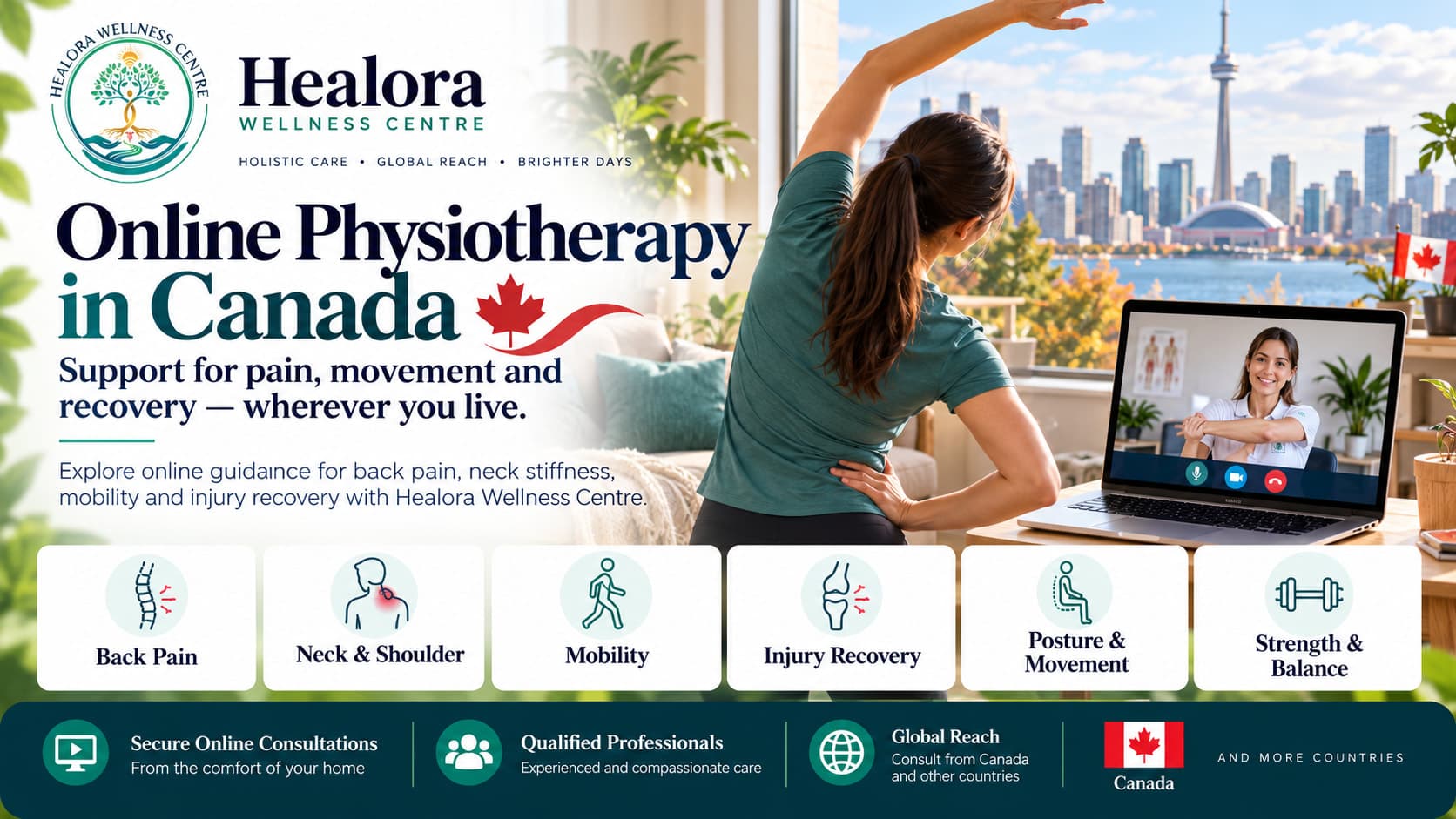
Online Physiotherapy in Canada: Get Support for Back Pain, Neck Pain and Better Mobility
Whether you work at a desk in Toronto, spend long hours commuting in Vancouver, stay active in Calgary or live in a smaller Canadian community, physical discomfort can affect your ability to enjoy everyday life.
Back pain, neck stiffness, shoulder discomfort, reduced mobility and injuries can make ordinary activities such as sitting, walking, exercising or lifting objects more difficult. When discomfort continues, it can also affect your sleep, work and confidence in movement.
Finding the right guidance is an important step towards understanding your symptoms and deciding what to do next.
Online physiotherapy in Canada offers a way to discuss movement-related concerns with an appropriately qualified physiotherapy professional remotely, when this approach is suitable for your condition and location.
Healora Wellness Centre provides an online healthcare platform where you can explore available healthcare services and professional consultations.
Explore your options: Visit Healora Wellness Centre
What Is Online Physiotherapy?
Online physiotherapy, sometimes called virtual physiotherapy or telerehabilitation, involves receiving physiotherapy guidance remotely, commonly through a video consultation.
Depending on your symptoms and the professional's assessment, an online session may include discussing your medical and movement history, reviewing how symptoms affect daily activities, observing certain movements and developing an appropriate management or rehabilitation plan.
A physiotherapist may also explain exercises, movement modifications and ways to progress activities safely.
However, online physiotherapy cannot replace every aspect of an in-person assessment. Some conditions require hands-on examination, diagnostic investigations, medical assessment or treatment that cannot be provided remotely.
The suitability of a virtual appointment depends on your symptoms, the professional's judgement and the services available.
7 Reasons to Consider a Physiotherapy Consultation
1. Persistent or Recurring Back Pain
Back discomfort can develop after lifting something heavy, increasing physical activity, sitting for extended periods or experiencing an injury.
You may notice stiffness when getting out of bed, discomfort during prolonged sitting or difficulty returning to your usual activities.
A physiotherapy assessment may help identify movement-related factors, assess how the discomfort affects your function and determine whether an exercise-based rehabilitation plan is appropriate.
Back pain has many possible causes, so persistent or unexplained symptoms should not automatically be attributed to posture or muscle strain.
2. Neck Pain and Shoulder Stiffness
Long hours at a computer, repetitive tasks, certain sports and other activities may contribute to neck or shoulder discomfort.
You might experience stiffness when turning your head, discomfort when working at a desk or difficulty performing activities that involve reaching overhead.
A physiotherapist may assess your movement, discuss your daily routines and suggest appropriate mobility or strengthening strategies when suitable.
If pain follows a significant injury or occurs with new weakness, numbness or other concerning symptoms, seek medical assessment rather than relying on an online exercise session.
3. Posture and Desk-Related Discomfort
Many Canadians spend substantial time working at computers, studying or using mobile devices.
You may notice discomfort after sitting for long periods or feel stiff when changing positions after a busy day.
There is no single perfect posture that everyone must maintain throughout the day. Comfort, movement variety, workload and individual needs all matter.
A physiotherapist can help you review your workstation, movement habits and activity levels and identify practical changes that may make daily work more comfortable.
4. Recovery After an Injury
An ankle sprain, muscle strain or sports-related injury may temporarily affect your strength, balance, mobility or confidence.
Once serious injury has been ruled out and remote rehabilitation is considered appropriate, a physiotherapist may help you understand recovery milestones and discuss a gradual return to suitable activities.
The timing and type of exercise should depend on the injury, symptoms and professional assessment rather than a generic online routine.
5. Reduced Mobility and Flexibility
Stiffness or difficulty moving comfortably can affect everyday activities such as climbing stairs, getting up from a chair, walking longer distances or reaching for objects.
A physiotherapy consultation may help assess your functional limitations and identify suitable mobility exercises or strengthening activities.
Your plan should account for your current abilities, medical history, symptoms and goals.
6. Returning to Exercise or Sport
Returning to physical activity after a break or injury can feel challenging. Increasing activity too quickly may aggravate symptoms, while avoiding movement unnecessarily can make it harder to rebuild confidence and fitness.
A physiotherapist may help you consider appropriate activity modifications, exercise progression and functional goals.
If you are recovering from a significant injury or surgery, follow the advice of your treating healthcare team before resuming demanding activities.
7. Maintaining Independence as You Age
Changes in strength, balance and mobility can affect confidence during daily activities.
A suitable physiotherapy assessment may help identify movement limitations and explore exercises or functional strategies that support safe participation in everyday life.
If you have experienced repeated falls, sudden changes in balance or unexplained weakness, seek appropriate medical assessment.
How Can Online Physiotherapy Help People in Canada?
Canada's geography means that travel distances, weather and access to local services can vary considerably. For some people, remote physiotherapy may offer another way to access professional guidance.
Convenience for Busy Schedules
If work, family responsibilities or travel make appointments difficult to arrange, a virtual session may reduce the need to commute.
Access From Different Communities
People living outside major urban centres may find remote appointments useful when a suitable professional is available and the service is appropriate for their needs.
Guidance for Home-Based Rehabilitation
When clinically suitable, a physiotherapist can demonstrate exercises, observe your technique on video and explain how to adapt movements to your abilities.
Support for Movement Goals
You may be able to discuss practical goals such as returning to walking, improving everyday mobility or gradually resuming recreational activities.
Important: Virtual physiotherapy is not appropriate for every injury or condition. If an in-person examination or urgent assessment is needed, your provider should help direct you towards suitable care.
How to Prepare for an Online Physiotherapy Consultation
A little preparation can help you make better use of your appointment.
Step 1: Describe Your Main Concern
Think about where you experience discomfort, when it began and which activities make it better or worse.
Step 2: Explain How It Affects Daily Life
Consider whether symptoms affect walking, sitting, sleeping, working, exercising or completing household tasks.
Step 3: Share Relevant Medical Information
Tell the physiotherapist about previous injuries, surgeries, existing diagnoses, current treatments and any recent changes in your symptoms.
Do not delay urgent care while collecting information.
Step 4: Prepare Your Consultation Space
Choose a private area with a reliable internet connection. Depending on your symptoms, you may need enough room for the professional to observe certain movements.
Wear comfortable clothing that allows movement, and have a stable chair nearby if needed.
Step 5: Ask About Your Rehabilitation Plan
Useful questions include:
-
What might be contributing to my movement difficulties?
-
Which activities should I modify for now?
-
What signs mean I should stop an exercise?
-
How should I progress activity safely?
-
Do I need an in-person examination or additional medical assessment?
How to Explore Physiotherapy Services With Healora
If you are considering online physiotherapy, the next step is to review the services available and confirm whether a suitable professional can support your needs.
Step 1: Explore Healora
Visit the Healora Wellness Centre homepage and explore the healthcare specialities available on the platform.
Step 2: Check Physiotherapy Availability
Confirm whether a physiotherapy professional is currently available for online consultations and whether your concern is suitable for remote assessment.
Step 3: Verify Qualifications and Location Eligibility
Check the professional's physiotherapy qualifications, experience and scope of practice.
If you are physically located in Canada, confirm that the professional is authorised to provide the service to someone in your province or territory. Physiotherapy regulation and registration requirements vary across Canada.
Step 4: Confirm Appointment Details
Review consultation availability, duration, fees, payment requirements and cancellation conditions before proceeding.
Step 5: Attend Your Consultation
Follow the booking instructions and join your session from a suitable private space. Be prepared to discuss your symptoms, functional goals and relevant medical history.
Ready to explore your options?
Visit Healora Wellness Centre to review available healthcare services and confirm physiotherapy consultation availability.
Online Physiotherapy Across Canada
Canada includes large cities, smaller communities and remote regions. Access to local physiotherapy and rehabilitation services can differ depending on where you live.
Online Physiotherapy in Toronto
If you work at a desk, commute regularly or balance a busy schedule, you may be looking for practical guidance for back discomfort, neck stiffness or returning to exercise. A suitable physiotherapist can assess whether virtual care is appropriate for your symptoms.
Online Physiotherapy in Vancouver
Work routines, recreational sports and outdoor activities can all place different demands on your body. If pain or reduced mobility is limiting your usual activities, consider discussing your concerns with an appropriately qualified professional.
Online Physiotherapy in Calgary and Edmonton
People managing work, family commitments, exercise routines or recovery after an injury may wish to explore remote physiotherapy. Confirm that the professional can provide the service to someone located in Alberta.
Online Physiotherapy in Ottawa and Montreal
If you are exploring online rehabilitation in Ontario or Quebec, check the provider's qualifications, language options where relevant, and eligibility to practise in your province.
Online Physiotherapy in Smaller Communities and Rural Canada
Remote consultations may be a useful option for some people who face long travel distances. However, they are not a substitute for in-person assessment when examination, equipment or hands-on care is required.
Regardless of your location, choose a professional whose qualifications and services meet the requirements that apply in your province or territory.
How to Choose the Right Physiotherapist in Canada
Before booking an appointment, consider these questions:
-
Qualifications: Does the professional have appropriate physiotherapy education and credentials?
-
Registration: Are they registered with the relevant provincial or territorial regulator when required?
-
Experience: Do they have experience relevant to your injury, symptoms or rehabilitation goals?
-
Virtual care: Can your condition be assessed safely through a remote appointment?
-
Privacy: Are confidentiality and health-information handling explained clearly?
-
Fees: Are the consultation fee, duration and cancellation conditions transparent?
-
Referral and coverage: Do you need a referral, and could your insurance or benefits plan cover the service?
You can use the Canadian Alliance of Physiotherapy Regulators as a starting point for information about physiotherapy regulation and credentialing. For registration, check the regulator responsible for the province or territory where you are located.
Do not assume that a professional registered in one jurisdiction can automatically provide regulated services to clients in another.
Online Physiotherapy vs. In-Person Physiotherapy
Both approaches may be useful, but the right format depends on your condition and care needs.
Online physiotherapy may be suitable when:
-
Your concern can be assessed adequately through discussion and video.
-
You need guidance on suitable exercises or activity modifications.
-
You can safely perform the movements required for the assessment.
-
Your physiotherapist determines that remote care is appropriate.
In-person physiotherapy may be necessary when:
-
A hands-on examination is required.
-
Your injury needs physical assessment or treatment.
-
You have significant functional limitations that make remote assessment difficult.
-
Your symptoms suggest that additional medical evaluation is needed.
A qualified physiotherapist should help determine which format is appropriate rather than assuming online care is always sufficient.
Frequently Asked Questions
Can I book online physiotherapy from anywhere in Canada?
Availability depends on the provider, service and the rules that apply in your province or territory. Confirm that the physiotherapist is authorised to provide services to someone located in your jurisdiction before booking.
Can online physiotherapy help with back pain?
A virtual assessment may help a physiotherapist understand your symptoms, evaluate certain movements and discuss appropriate management options. Whether online care is suitable depends on the cause of your pain, your symptoms and the need for an in-person examination.
Can a physiotherapist prescribe exercises during an online consultation?
A physiotherapist may recommend exercises when they are appropriate following an assessment. The exercises, intensity and progression should be tailored to your needs and adjusted if symptoms worsen.
Is online physiotherapy suitable after surgery?
It may be suitable for certain stages of rehabilitation, but this depends on the procedure, your recovery, any restrictions from your surgical team and the physiotherapist's assessment. Follow your treating team's instructions.
Do I need a doctor's referral for physiotherapy in Canada?
Requirements can vary by province, provider and insurance plan. Check with the physiotherapist, your provincial regulator and your insurer before booking.
Will my health insurance cover online physiotherapy?
Coverage depends on your provincial health plan, extended benefits or private insurance policy and the provider's eligibility. Confirm coverage and any documentation requirements with your insurer.
When should I seek urgent medical care instead of booking physiotherapy?
Seek urgent medical assessment for severe pain after significant trauma, new or worsening weakness, or other concerning symptoms. New loss of bladder or bowel control or numbness around the groin or saddle area alongside back symptoms can indicate a medical emergency. Call 911 or go to an emergency department if you suspect an emergency.
For less urgent health concerns in Canada, provincial or territorial health advice services may help you decide where to seek care.
Take the Next Step Towards Better Movement
Back pain, neck stiffness, reduced mobility and injuries can interfere with work, exercise and everyday activities. Understanding your symptoms and finding suitable professional guidance can help you make informed decisions about your recovery.
Online physiotherapy may be an option when remote assessment is appropriate and a qualified professional is available in your location.
Healora Wellness Centre provides an online platform where you can explore healthcare services and available consultations.
Explore your options today: Visit Healora Wellness Centre
Review the available services, confirm physiotherapy availability and verify that the selected professional can provide care to someone located in your province or territory before booking.
Disclaimer: This article is for general educational purposes and is not a diagnosis or an individual treatment plan. Online physiotherapy is not appropriate for every condition. Seek urgent medical care for emergency symptoms and consult a qualified healthcare professional for personalised assessment and treatment advice.