
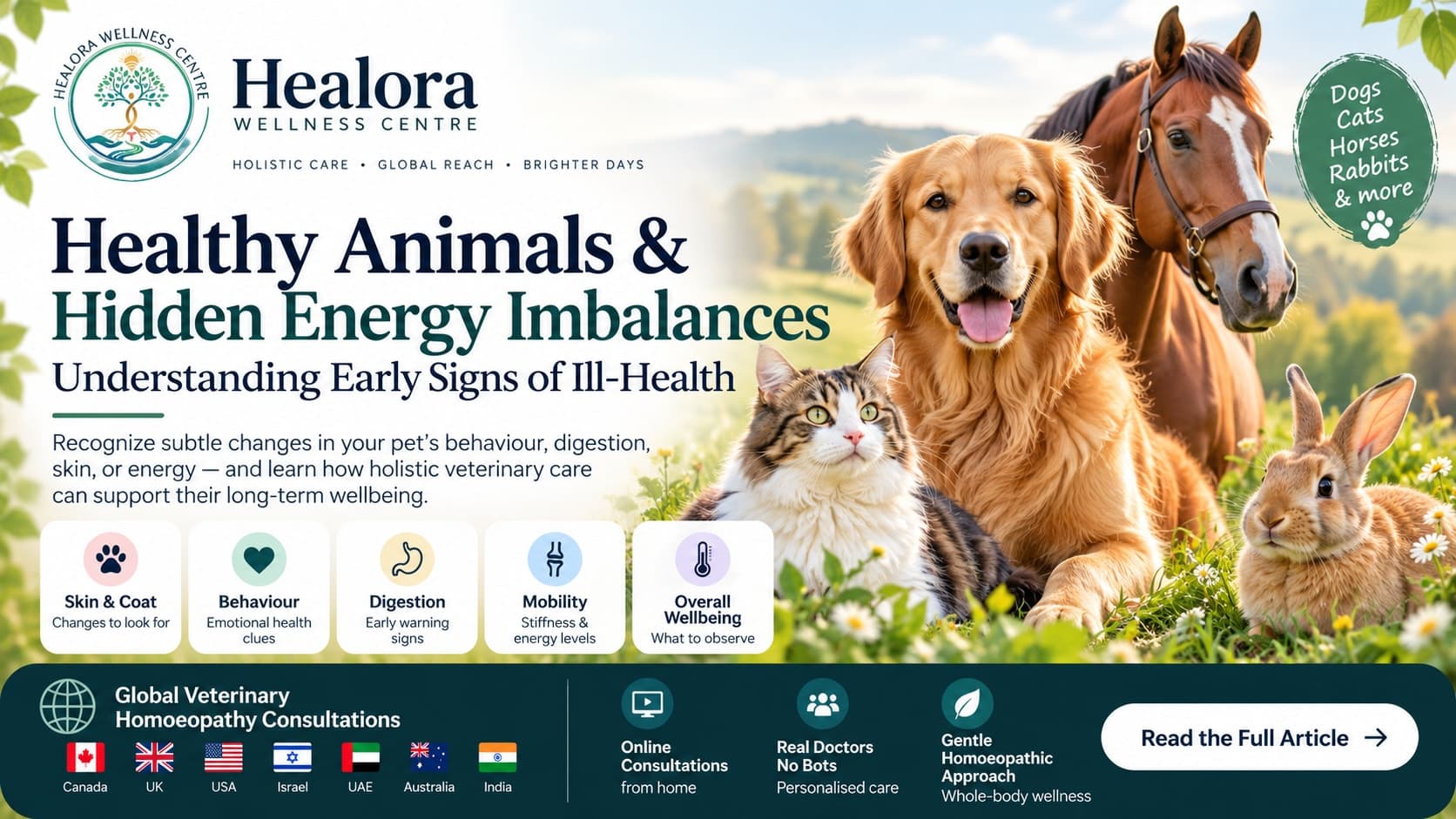
Healthy Animals & Hidden Energy Imbalances: Understanding Early Signs of Ill-Health
Animals cannot tell us when something feels wrong. Instead, they communicate through changes in their behaviour, appetite, movement, grooming habits and everyday routines.
A dog that becomes unusually withdrawn, a cat that stops grooming, or a horse that develops a change in its usual temperament may be showing signs that deserve attention. Although these changes do not necessarily indicate a serious illness, persistent or unexplained symptoms should never be ignored.
In holistic and homoeopathic veterinary practice, concepts such as vital force and energy imbalance are sometimes used to describe an animal’s overall state of wellbeing. These are concepts within the homoeopathic tradition, rather than medically established explanations for illness. From a practical perspective, observing changes early and seeking appropriate veterinary advice can help animal caregivers make informed decisions.
At Healora Wellness Centre, our online veterinary homeopathy consultation service provides an opportunity to discuss ongoing animal health concerns, share relevant history and explore whether a complementary approach may be appropriate.
Whether you care for a dog, cat, horse or another companion animal, understanding what is normal for your animal is an important first step.
Concerned about changes in your animal’s health? Explore Healora’s Veterinary Homeopathy consultations and review the available professionals before booking.
What Does an “Energy Imbalance” Mean in Holistic Veterinary Practice?
In holistic health traditions, an animal’s wellbeing is considered in the context of its physical condition, behaviour, environment, diet and daily routines.
Homoeopathic practitioners may use the term vital force to describe the body’s overall vitality. Within this framework, recurring symptoms and behavioural changes may be considered alongside the animal’s broader history and individual characteristics.
However, symptoms such as fatigue, skin irritation, digestive problems or changes in behaviour can have many possible causes, including infections, parasites, allergies, pain, nutritional issues and environmental stress. They cannot reliably be attributed to an energy imbalance without appropriate assessment.
Factors worth considering when evaluating an animal’s wellbeing include:
-
Diet and hydration: Changes in food intake, water consumption or body weight.
-
Environment: Temperature, housing, noise, exercise opportunities and exposure to irritants.
-
Stress and routine: Changes in household members, transport, social interactions or living conditions.
-
Physical health: Skin and coat condition, dental health, mobility, digestion and sleep.
-
Individual history: Age, breed, previous health problems, medication and existing veterinary treatment.
Keeping track of these factors can help you describe your animal’s condition more clearly when speaking with a veterinary professional.
Early Signs of Ill-Health in Dogs and Cats
Dogs and cats often develop recognisable routines. When those routines change consistently, it is worth paying attention.
The following observations are not diagnoses. They are prompts to investigate changes that persist, recur or appear alongside other symptoms.
1. Skin and Coat Changes
The skin and coat can provide useful clues about an animal’s general condition.
Watch for:
-
Persistent itching, scratching or licking.
-
Dry, oily, dull or unusually shedding fur.
-
Recurrent ear irritation, discharge or unpleasant odour.
-
Redness, scabs, sores or areas of hair loss.
-
Changes in grooming habits, particularly in cats.
-
Eye discharge, excessive tearing or irritation.
-
Brittle, damaged or unusually shaped claws.
Flea infestations, allergies, skin infections, parasites and other conditions can cause similar signs. Persistent symptoms deserve veterinary assessment rather than being assumed to reflect an internal imbalance.
2. Behavioural and Emotional Changes
Behaviour is another important part of understanding your animal’s wellbeing.
You may notice:
-
New or increasing fearfulness around people, animals, noises or unfamiliar environments.
-
Unusual aggression, irritability or defensive behaviour.
-
Excessive barking, restlessness or repetitive behaviours.
-
Withdrawal from family members or other animals.
-
Unusual licking, chewing or sucking behaviours.
-
Difficulty settling or changes in sleeping patterns.
-
New litter-box avoidance or changes in normal elimination habits in cats.
Pain, fear, environmental stress and medical conditions can all affect behaviour. Sudden behavioural changes, especially when accompanied by other symptoms, warrant prompt attention.
3. Digestive and Oral Health
Changes in eating, drinking, digestion or oral health may be easy to overlook when they develop gradually.
Potential warning signs include:
-
Persistent bad breath or visible dental tartar.
-
Red or inflamed gums.
-
Reduced appetite or unexplained weight changes.
-
Repeated vomiting or frequent digestive upset.
-
Diarrhoea, mucus in the stool or persistent constipation.
-
Excessive thirst or noticeably increased urination.
-
Eating non-food objects, sometimes known as pica.
-
Recurrent anal gland problems or suspected parasites.
Occasional hairballs can occur in cats, but frequent vomiting should not automatically be considered normal. Likewise, a sudden increase in thirst may indicate an underlying health issue.
Important: Repeated vomiting, inability to urinate, suspected poisoning, severe abdominal pain or blood in vomit or stool may require urgent veterinary attention.
4. Mobility, Stiffness and Energy Levels
Changes in movement may develop slowly, making them harder to recognise at first.
Look for:
-
Difficulty getting up after resting.
-
Reluctance to jump, climb stairs or exercise.
-
Limping or changes in walking.
-
Reduced willingness to play or go for walks.
-
Unusual fatigue or reduced stamina.
-
Sensitivity when touched or handled.
-
Changes in posture or difficulty getting comfortable.
Joint conditions, injuries, muscle problems and other medical issues may contribute to these signs. A veterinary examination can help determine whether further investigation is needed.
5. Temperature and General Condition
An animal that feels unusually warm, appears weak or behaves differently may need assessment. Touch alone cannot reliably establish whether an animal has a fever.
A measured temperature should be interpreted according to the species and the circumstances. Do not rely on a single temperature reading to decide whether an animal is well, and seek veterinary advice if you suspect fever or notice additional symptoms.
Signs of Ill-Health in Horses
Horses can show changes through their behaviour, appetite, movement, coat condition and exercise tolerance. Because some equine conditions can become serious quickly, unusual signs should be assessed in context.
Behaviour and Stress
Observations worth discussing with an equine veterinarian include:
-
Repetitive stable behaviours, such as weaving or stall walking.
-
New irritability, aggression or sensitivity to handling.
-
Unusual fear of noises, people or confined spaces.
-
Changes in social behaviour or willingness to work.
-
Repeated flank-directed behaviour or other unusual repetitive habits.
These behaviours may have different causes, including management conditions, discomfort, stress or underlying illness.
Skin, Eyes and Respiratory Signs
Monitor your horse for:
-
Persistent eye discharge, redness or swelling.
-
Coughing, nasal discharge or noisy breathing.
-
Changes in sweating patterns.
-
A dull coat, skin irritation or poor wound healing.
-
Swelling of the limbs or other unexplained physical changes.
Breathing difficulty, significant eye pain, severe swelling or rapidly worsening symptoms require prompt veterinary attention.
Digestion, Appetite and Hydration
Digestive concerns in horses should never be dismissed as a simple wellness issue.
Pay attention to:
-
Reduced appetite or unusual food preferences.
-
Recurrent episodes of abdominal discomfort.
-
Changes in droppings, including unusually dry or hard faeces.
-
Unexplained weight loss or changes in body condition.
-
Unusual drinking behaviour.
-
Recurrent digestive disturbances.
Suspected colic is a veterinary concern. Contact an equine veterinarian promptly if your horse shows signs such as repeated rolling, pawing, looking at its flank, sweating or other unusual signs of abdominal pain. Do not wait for an online consultation.
Movement and Exercise Tolerance
Changes in warm-up time, muscle stiffness, balance, hoof condition, willingness to move or difficulty lifting a foot may warrant investigation.
If your horse develops sudden severe stiffness, weakness, marked sweating or an inability to move normally, seek urgent veterinary care.
Recognising Changes in Rabbits
Rabbits often hide signs of illness, which makes small changes in their normal behaviour especially important.
Watch for:
-
Eating less or refusing familiar foods.
-
Producing fewer or smaller droppings.
-
Drooling, a wet chin or difficulty chewing.
-
Reduced activity or unusual hiding.
-
Changes in posture or reluctance to move.
-
Tooth abnormalities or signs of oral discomfort.
Rabbits can deteriorate quickly when they stop eating or their digestive system slows down. A rabbit that stops eating or produces substantially fewer droppings needs prompt veterinary assessment. Do not wait to see whether the problem resolves on its own.
How Does Your Animal Live? The Importance of Environment and Natural Behaviour
A useful question for any animal caregiver is: Does my animal have the conditions it needs to express normal, healthy behaviour?
Domestic animals depend on us for appropriate nutrition, exercise, shelter, social interaction and veterinary care. Their daily routines may differ considerably from the environments in which their species evolved.
Depending on the species, wellbeing considerations may include:
-
Adequate opportunities for movement and exercise.
-
A suitable, balanced diet and constant access to appropriate water.
-
Safe resting areas and species-appropriate environmental enrichment.
-
Opportunities for natural behaviours, including exploration and social interaction.
-
Appropriate grooming, dental care, parasite prevention and health checks.
-
Consistent routines that minimise avoidable stress.
These practical factors can support welfare, but no single lifestyle adjustment can prevent every illness. Environmental improvements should complement—not replace—professional veterinary assessment and appropriate treatment.
What Should You Do When You Notice Changes in Your Animal?
You do not need to identify the cause yourself. A clear record of what has changed can make a veterinary consultation more productive.
Try these steps:
1. Record the change. Note when the symptom began, how often it occurs and whether it is getting better or worse.
2. Observe everyday habits. Record appetite, water intake, activity, sleep, grooming, stool changes and any unusual behaviour.
3. Document relevant history. Include the animal’s age, species, previous illnesses, diet, current medication and any recent environmental changes.
4. Collect useful information. Photographs, short videos and previous veterinary reports may help explain what you have observed.
5. Seek appropriate veterinary care. Arrange an examination when symptoms persist or recur. Seek urgent care for severe, sudden or potentially life-threatening symptoms.
6. Discuss complementary approaches carefully. If you are considering homoeopathy, tell the veterinary professional about all current medicines and treatments. Do not stop or delay prescribed treatment in favour of homoeopathy.
How Can an Online Veterinary Homeopathy Consultation at Healora Help?
When an animal has an ongoing concern that is suitable for remote discussion, an online consultation can offer a convenient way to explain the situation and review relevant history.
At Healora Wellness Centre, the veterinary homeopathy service allows animal caregivers to explore available professionals and discuss concerns through an online appointment.
Depending on the professional, service and your location, the consultation may involve:
-
Discussing the animal’s symptoms and health history.
-
Reviewing changes in behaviour, diet, environment and daily routines.
-
Sharing relevant photographs, videos or previous medical information.
-
Discussing whether a homoeopathic approach may be appropriate as a complementary option.
-
Identifying when an in-person veterinary examination, diagnostic testing or other care is needed.
Remote consultations have limitations. A video call cannot provide every physical examination or diagnostic test, and not every concern is suitable for online care.
Who Can Consider a Consultation?
Animal caregivers who want to discuss ongoing concerns may explore the service for animals such as:
-
Dogs and cats.
-
Horses.
-
Rabbits and other companion animals, subject to the professional’s scope of practice.
-
Other animal species where an appropriate professional is available.
Availability depends on the professional, the animal concerned and the location from which the consultation is requested.
Where Can You Consult From?
Healora welcomes enquiries from animal caregivers exploring online consultations in locations including Canada, the United Kingdom, the United States, Israel, the United Arab Emirates, Australia and India.
However, consultation availability and professional eligibility can vary by location. Please check the available professional’s profile and confirm service availability before booking.
Explore the service: View Veterinary Homeopathy at Healora Wellness Centre
Frequently Asked Questions
What are the earliest signs that a pet may be unwell?
Early signs may include changes in appetite, thirst, grooming, coat condition, behaviour, activity, digestion or mobility. These changes can have many causes, so persistent or unusual symptoms should be assessed by a veterinary professional.
Does an energy imbalance mean my animal has a disease?
No. “Energy imbalance” is a concept used in some holistic traditions, including homoeopathy. It is not a veterinary diagnosis, and it cannot establish whether an animal has a particular condition. Symptoms need to be interpreted through appropriate veterinary assessment.
Can homoeopathy treat all animal health problems?
No treatment should be assumed to work for every animal or condition. Scientific evidence does not establish homoeopathy as an effective treatment for animal diseases. It should not replace evidence-based veterinary care, prescribed medicines or necessary diagnostic tests.
Can I consult Healora online about my pet?
Healora offers an online veterinary homeopathy consultation service. You can review the available professionals and discuss whether your concern is appropriate for remote consultation. An in-person veterinary examination may still be necessary.
When should I seek urgent veterinary help?
Seek urgent veterinary care for breathing difficulty, collapse, seizures, suspected poisoning, severe bleeding, significant trauma, severe pain, difficulty giving birth or rapidly worsening symptoms. Repeated vomiting, suspected colic in horses, or a rabbit that stops eating also warrants prompt veterinary attention.
Can I combine homoeopathy with conventional veterinary treatment?
If you are considering homoeopathy alongside existing treatment, discuss this openly with the veterinarian responsible for your animal’s care. Do not discontinue prescribed medicines or delay necessary treatment. Evidence-based diagnosis and treatment should remain the priority.
Support Your Animal’s Wellbeing With Informed Care
Animals rely on us to recognise when something changes. Paying attention to their everyday habits, recording unusual symptoms and seeking timely veterinary advice are practical ways to support their wellbeing.
Holistic approaches may be of interest to some animal caregivers, but it is important to separate traditional concepts from established veterinary evidence and to choose care that prioritises the animal’s safety.
If you would like to discuss an ongoing animal health concern through an online consultation, explore the professionals available through Healora Wellness Centre.
Ready to take the next step?
Explore Veterinary Homeopathy Consultations at Healora
This article is for general educational purposes only. It is not a veterinary diagnosis or treatment plan and does not replace advice from a qualified veterinary professional. Homoeopathy has not been established as an effective treatment for animal diseases. Always seek appropriate veterinary care for suspected illness, and obtain urgent in-person assistance when needed.