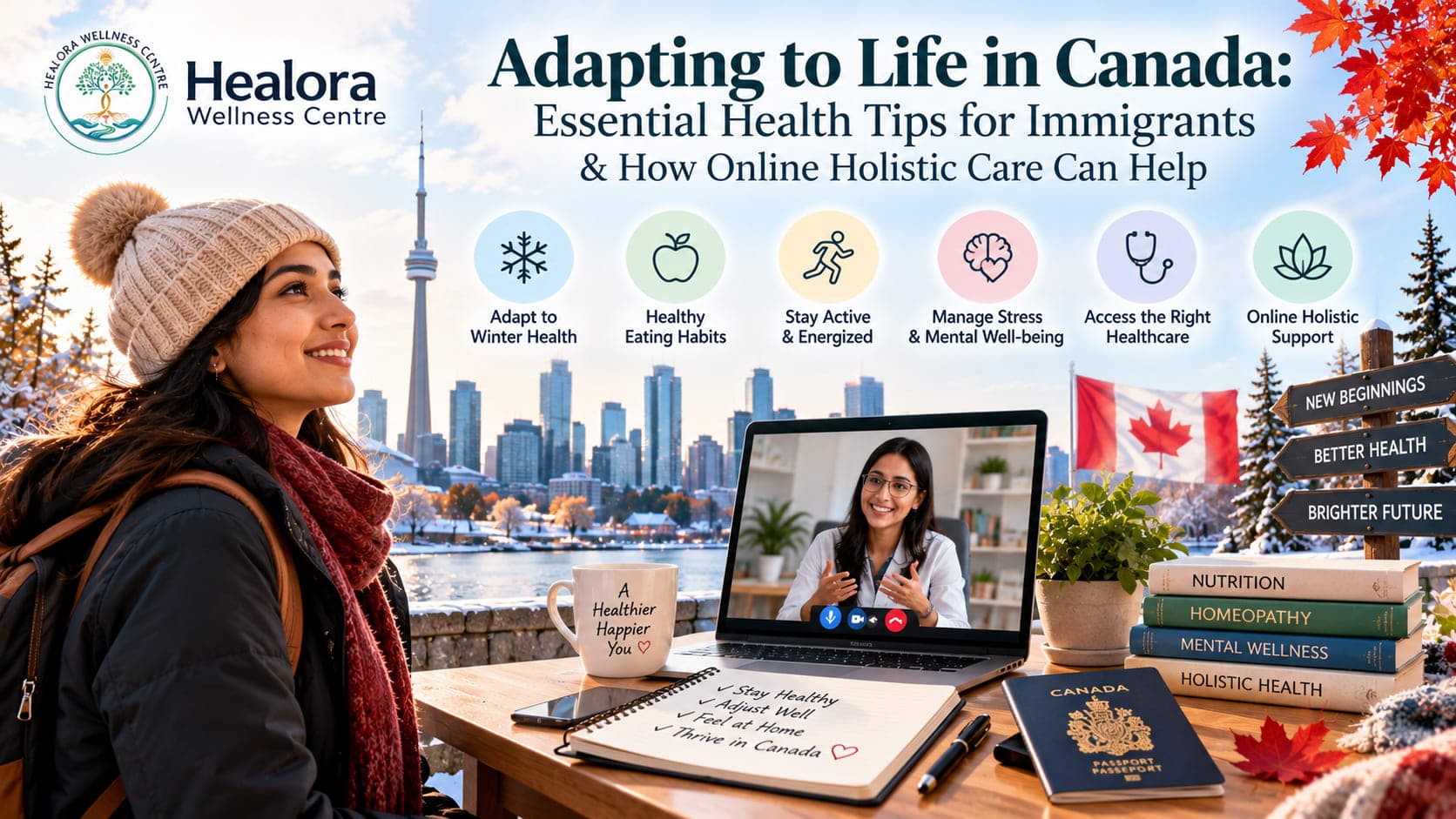
Adapting to Life in Canada: Essential Health Tips for Immigrants and How Online Holistic Care Can Help
Introduction: Building a Healthy Life in Canada
Moving to Canada can be an exciting milestone. New career opportunities, education, diverse communities and the possibility of a fresh start make it an attractive destination for people from around the world.
However, settling into a new country involves more than finding accommodation and adjusting to work or university. Changes in climate, food habits, daily routines, social connections and healthcare arrangements can also influence your physical and emotional well-being.
For newcomers arriving from warmer climates, Canadian winters may require a completely different approach to clothing, outdoor activities and seasonal health. Differences in grocery shopping, cooking ingredients and meal schedules can affect eating habits, while unfamiliar healthcare procedures may make it difficult to know where to seek help.
The good news is that many of these challenges can be managed through practical preparation, healthy routines and appropriate professional support.
At Healora Wellness Centre, we provide online wellness consultations and services in areas including homeopathy, counselling and psychology. Our aim is to help people explore suitable wellness support while making informed decisions about their health.
In this guide, we discuss essential health tips for immigrants in Canada, ways to navigate the healthcare system and how online consultations may fit into your wellness routine.
Common Health Challenges Newcomers May Experience in Canada
Everyone adjusts differently to a new environment. Your experience may depend on your previous climate, medical history, lifestyle, work schedule and access to local support.
1. Adapting to Canadian Winters
Canada's climate varies considerably by region, but many areas experience cold winters, shorter daylight hours and icy conditions.
Newcomers may need time to learn how to dress for changing temperatures, heat their homes safely and maintain regular physical activity during colder months.
Cold, dry air and indoor heating can also contribute to dry skin and discomfort. Spending less time outdoors may affect activity levels and daily routines.
Practical tips:
-
Dress in layers and use appropriate winter footwear.
-
Keep your home comfortably warm and follow safe heating practices.
-
Use moisturiser to help manage dry skin.
-
Stay physically active with suitable indoor or outdoor activities.
-
Seek medical advice if you experience persistent respiratory symptoms, unusual fatigue or other concerning changes.
Cold weather itself does not directly cause every cold or respiratory infection. Respiratory viruses spread through exposure to infected people and contaminated particles or surfaces, while seasonal conditions can influence how people interact and spend time indoors.
2. Vitamin D and Reduced Daylight
Shorter winter days can make it more difficult to obtain vitamin D through sunlight. Vitamin D is important for bone health and normal muscle function.
However, fatigue and low mood can have many causes, and symptoms alone cannot confirm a vitamin D deficiency.
What you can do:
-
Include vitamin D-containing foods in your diet, such as fortified milk or suitable fortified alternatives and oily fish.
-
Ask a healthcare professional whether supplementation is appropriate for you.
-
Seek advice about testing if you have symptoms or risk factors that warrant assessment.
-
Maintain regular sleep and activity routines during winter.
Do not take high-dose supplements without professional advice. More is not always better, and excessive vitamin D intake can be harmful.
If low mood, loss of interest or changes in sleep persist, consider speaking with a qualified healthcare professional about possible causes, including seasonal affective disorder (SAD).
3. Changes in Diet and Digestive Habits
Moving to Canada can change how you shop, cook and eat. You may find unfamiliar ingredients, different portion sizes, limited access to traditional foods or a need to prepare meals around work and study.
These changes may affect dietary balance, fibre intake, hydration and regular meal patterns. Some people experience digestive discomfort during periods of dietary or routine change.
Practical tips:
-
Include vegetables, fruits, whole grains, protein sources and healthy fats in your meals.
-
Increase fibre gradually and drink adequate fluids.
-
Keep familiar, nutritious foods from your home culture where available.
-
Plan simple meals for busy workdays.
-
Notice whether particular foods consistently trigger symptoms.
Probiotics and fermented foods may suit some people's diets, but they are not necessary for everyone and do not treat every digestive condition.
Persistent abdominal pain, blood in the stool, unexplained weight loss, ongoing vomiting or other significant symptoms require medical assessment rather than relying on dietary changes alone.
4. Dry Skin and Hair Concerns
Cold air, indoor heating, frequent hot showers and changes in personal care products can affect the skin and scalp.
Some newcomers may notice increased dryness, irritation or changes in hair condition after relocating. However, hair loss can also be associated with stress, nutritional deficiencies, hormonal changes, medications and medical conditions.
Helpful habits include:
-
Use a gentle cleanser and moisturise regularly.
-
Avoid excessively hot showers if your skin becomes dry.
-
Protect exposed skin from harsh weather.
-
Use hair-care products suited to your scalp and hair type.
-
Seek professional advice if symptoms persist, worsen or involve significant hair loss.
Hard water varies by location and may affect how hair and skin feel, but it should not automatically be assumed to be the cause of a persistent skin or hair problem.
5. Stress, Sleep and Lifestyle Changes
Relocation often involves multiple responsibilities at once: finding employment, managing finances, adapting to a new workplace, supporting family members and establishing a social network.
Shift work, academic pressure and irregular routines can interfere with sleep and recovery. Being separated from familiar support systems may add to the emotional burden.
To support your well-being:
-
Establish a consistent sleep and wake schedule where possible.
-
Make time for physical activity and relaxing activities.
-
Stay connected with family and friends.
-
Set realistic goals rather than expecting to adjust immediately.
-
Seek counselling or healthcare support if stress begins to interfere with daily life.
Persistent exhaustion, anxiety, low mood or sleep difficulties deserve attention. They should not automatically be attributed to immigration or dismissed as a normal part of settling in.
Understanding Healthcare in Canada
Learning how healthcare works is an important part of settling successfully.
Canada's healthcare arrangements vary by province and territory. Eligibility, coverage and waiting periods depend on your immigration status and where you live. Some newcomers may need private insurance while waiting for provincial or territorial coverage to begin.
Here are practical steps to help you navigate the system.
Apply for Appropriate Health Coverage
Check the official health insurance requirements for your province or territory. Understand when your coverage begins, which services are included and whether you need temporary private insurance.
Do not assume that every healthcare service, prescription or consultation is automatically covered.
Find a Family Doctor or Primary Care Provider
A family doctor, nurse practitioner or primary care team can help with routine health concerns, ongoing conditions, preventive care and referrals when necessary.
If you cannot find a family doctor, explore local community health centres, walk-in clinics and official provincial healthcare resources.
You can start with the Government of Canada's guide to finding doctors and dentists in Canada.
Understand When to Seek Urgent Care
Online wellness consultations are not a replacement for emergency services or a full medical assessment when one is needed.
If you experience severe breathing difficulties, chest pain, signs of a stroke or another potentially life-threatening problem, call 911 or go to the nearest emergency department.
For non-emergency symptoms, a local primary care provider or appropriate medical service can help determine the next steps.
Essential Health Tips for a Successful Transition
Building a sustainable routine is often more useful than trying to change everything at once.
1. Make Seasonal Preparation a Habit
Prepare suitable clothing before winter temperatures drop. Keep winter essentials accessible, check local weather conditions and plan safe routes when snow or ice affects travel.
During darker months, maintain regular daily routines and make time for outdoor daylight when conditions allow.
2. Maintain a Balanced and Familiar Diet
You do not need to abandon your traditional cuisine to eat well in Canada. Many familiar foods can be included in a balanced diet.
Combine cultural food preferences with a variety of vegetables, fruits, whole grains, protein sources and adequate fluids. Planning meals ahead can also help reduce dependence on less nutritious convenience foods.
If you have a medical condition or specific dietary requirements, ask an appropriately qualified professional for personalised advice.
3. Stay Physically Active
Regular movement can support cardiovascular health, strength, sleep and general well-being.
Choose activities that fit your circumstances, such as walking, indoor workouts, swimming or community fitness programmes. Start at a level appropriate for your fitness and medical history.
During icy weather, prioritise safe indoor options or suitable footwear and routes.
4. Protect Your Sleep and Emotional Well-Being
Try to maintain consistent sleep routines and create time to unwind after work or study.
You may also benefit from connecting with cultural communities, participating in local events or exploring settlement services. These opportunities can help you establish friendships and feel more connected to your new surroundings.
If emotional difficulties persist or become overwhelming, professional counselling may be worth considering.
5. Seek Advice Before Starting Supplements or Remedies
Supplements and complementary health products can have risks, including interactions with prescribed medication. Their suitability depends on your individual circumstances.
Discuss new products with a qualified healthcare professional, especially if you are pregnant, managing a chronic condition, taking medication or considering treatment for a child.
Do not delay medical assessment or replace evidence-based treatment with an unproven remedy.
How Healora Wellness Centre Can Support Your Wellness Journey
Finding suitable health support in a new country can feel complicated. Online consultations may provide an additional way to discuss concerns, understand available options and access certain services without travelling to a clinic.
Healora Wellness Centre offers online services in areas including homeopathy, counselling and psychological consultations. The right service depends on the concern you want to address and the qualifications and location eligibility of the practitioner.
1. Online Homeopathy Consultations
Some people explore homeopathy as a complementary approach to wellness. If you are considering it, it is important to understand its limitations.
Current scientific evidence provides little support for homeopathy as an effective treatment for specific health conditions. It should not replace established medical care, vaccinations, prescribed medicines or timely assessment of symptoms.
If you choose to explore homeopathy, discuss it openly with your primary healthcare provider and check the safety of any product you intend to use.
You can learn more about Healora's service through our online homeopathy consultation page.
2. Counselling and Psychological Support
Adjusting to life in Canada can involve stress, loneliness, uncertainty and changes in family relationships.
Counselling may help you explore these experiences, develop coping strategies, work through transitions and identify practical ways to improve emotional well-being.
Depending on your needs and the professional's qualifications, psychological consultations may also help with concerns such as anxiety, low mood and adjustment difficulties.
Explore Healora's online counselling services and online psychology consultations to learn more about available options.
3. Convenience for Busy Schedules
Work, study, childcare and transport can make appointments difficult to arrange.
Online consultations may reduce travel time and allow you to speak with a professional from a private location with a reliable internet connection. Appointment availability, time zones and the suitability of remote care vary, so confirm these details before booking.
4. Language and Cultural Considerations
Being able to explain your concerns in a comfortable language can make health conversations easier.
If you prefer Malayalam or English, ask whether a suitable practitioner can provide the service in your preferred language. Also check the practitioner's qualifications and experience with your specific concern.
Culturally responsive care should respect your background while providing accurate information and appropriate professional guidance.
5. Clear Fees and Privacy Information
Before booking an online consultation, review the fees, cancellation policy, privacy practices and what the service includes.
Online care is not always cheaper than local services, and insurance coverage may differ. Similarly, no service should promise absolute confidentiality in every situation; legal and professional exceptions can apply.
Healora encourages prospective clients to review service information and confirm that a practitioner can legally provide the relevant service in their location.
Is Holistic Care Right for You?
Holistic wellness generally considers different aspects of well-being, including physical health, emotional needs, lifestyle and social circumstances.
This broader perspective can be useful when planning healthy routines, managing everyday stress and identifying areas where support may be needed. However, the term holistic does not automatically mean that a treatment is scientifically proven, risk-free or suitable for every person.
When choosing a service, ask:
-
What qualifications and professional registration does the practitioner hold?
-
Is the service suitable for my particular concern?
-
What evidence supports the proposed approach?
-
Could the treatment interact with medicines or delay appropriate care?
-
What are the fees, privacy arrangements and follow-up options?
An informed decision should respect your preferences while prioritising safety and evidence-based healthcare.
Frequently Asked Questions
1. What are the most important health tips for immigrants in Canada?
Prepare for local weather, maintain a balanced diet, stay physically active, protect your sleep, learn how healthcare coverage works and build a local support network. Seek professional advice when symptoms persist or interfere with daily life.
2. How can newcomers find healthcare in Canada?
Start by checking your province or territory's health insurance requirements and finding a family doctor or primary care provider. Community health centres, walk-in clinics and settlement organisations may also help you understand local options.
3. Can I book an online health consultation while living in Canada?
Online consultations may be available, depending on the service, your location and the practitioner's authorisation to serve clients in your province or territory. Confirm eligibility and service details before booking.
4. Is homeopathy scientifically proven to treat colds or digestive problems?
There is little reliable scientific evidence supporting homeopathy as an effective treatment for specific health conditions. It should not replace appropriate medical evaluation or evidence-based treatment for respiratory infections, digestive symptoms or other health concerns.
5. Should immigrants in Canada take vitamin D supplements during winter?
Not everyone needs the same supplement or dose. Vitamin D needs depend on factors such as diet, age, health and individual risk. Discuss suitable supplementation with a qualified healthcare professional instead of taking high doses without advice.
6. Can online counselling help with stress after immigration?
Counselling may help people explore adjustment stress, loneliness, family concerns and other emotional challenges. Its suitability depends on individual needs and the professional's qualifications.
7. Is online holistic care a replacement for a family doctor?
No. Online wellness consultations should not replace primary medical care, emergency services, prescribed treatment or appropriate diagnostic assessment. A family doctor or qualified local healthcare professional remains important for ongoing medical needs.
Start Your Wellness Journey with Healora Wellness Centre
Adapting to life in Canada takes time, patience and the right support. Preparing for seasonal changes, maintaining healthy routines and understanding the healthcare system can help you build a stronger foundation for your new life.
When additional guidance would be helpful, online consultations may offer another way to explore suitable wellness and psychological support.
Visit Healora Wellness Centre to explore our online homeopathy consultations, counselling services and psychology consultations.
Take informed steps towards your well-being, wherever life takes you.
Medical disclaimer: This article is for general educational purposes only and does not provide medical diagnosis or treatment. Homeopathy has limited evidence of effectiveness for specific health conditions. Do not delay or replace evidence-based medical care with complementary remedies. Seek advice from a qualified healthcare professional about symptoms, supplements and treatment decisions.